

My friend Merrill Charette, founder of ShipShape, recently posted an excellent article on LinkedIn and asked the question how to increase boater retention. Because my response was rather lengthy and would not fit within a standard LinkedIn post, I decided to post an article instead.
The short answer is there is no simple solution to increasing boater retention. The reasons some leave are varied and are often due to things that are beyond the control of the boating industry. However, like so many other products and services, it all comes down to delivering value. That is, are the benefits derived from the boating experience worth the time and expense required? From my experience with researching boaters for over 3 decades, people will invest a considerable amount of time and money in the boating lifestyle as long as they are receiving adequate value or enjoyment.
The Cost vs. Benefit Balance
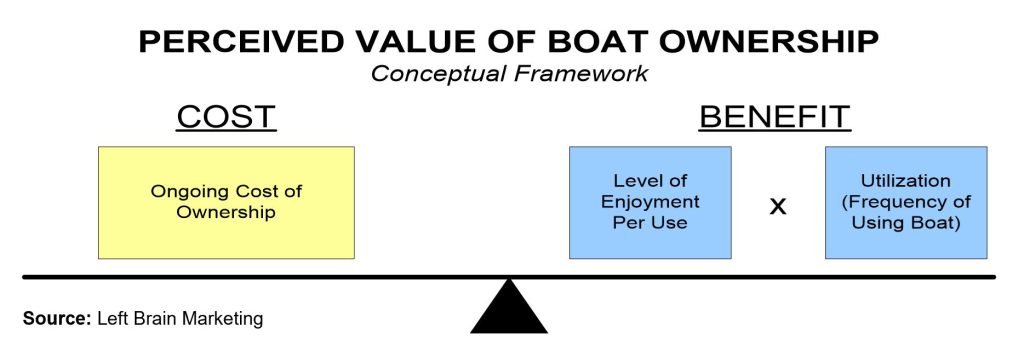
Below is a graphic I developed from an earlier study with the RBFF and the state of Oregon that illustrates the cost/benefit balance with boaters. In simplistic terms, the way to improve boater retention is to either reduce the costs, increase the enjoyment, or some combination of the two. But how do you do that?
Lowering Ongoing Costs
On the cost side, it is important to note that it is the ongoing costs – not the initial purchase price – that leads people to get out of boating (the initial price keeps many from getting in to boating in the first place or, at least, keeps them from buying “New”). This includes things like maintenance/repairs, insurance, storage, registration fees, fuel, etc. While many of these expenses are beyond what we can influence as an industry, we can play a part by continuing to offer quality products that do not require a lot of maintenance and are efficient to operate, and ensuring adequate and affordable boat storage is available.
Increase Boat Utilization
On the benefit side, the big opportunity is with utilization. One of the most common reasons why people leave boating is because they didn’t use their boat often enough. And it is typically not because of a lack of enjoyment or interest. Instead, it is more about work and family obligations (and sometimes health issues) getting into the way. The reverse of this is why we saw the boom during covid. Many of the things competing for discretionary time were reduced or eliminated which left much more time for boating.
Again, influencing how often people use their boat is no easy task. And some already do a great job with this. For example, fishing tournaments do wonders for getting anglers to use their boats more often and even purchase upgrades (and anglers, in general, are less likely to defect anyway vs. pleasure boaters). Customer appreciate events, “poker runs”, and holiday boat parades are also good examples of ways to increase usage and we should perhaps do more of these types of activities – much like the motorcycle and ATV industries do with various rallies and rider events across the country.
Reducing service “cycle times” is another way to increase utilization and is especially important in northern markets with short seasons. A service repair that takes 2 weeks or more for a family in Michigan, Wisconsin or Minnesota is really cutting into their potential boating season. It is important to get these, and other boaters, back on the water quickly.
Enhancing the Experience
Fortunately, when people do get out on their boat, they typically enjoy the experience. But there are some small things that we can do to help in this regard as well, including better boating training to instill confidence for new boaters, ensuring our waterways are in good condition (and well stocked for anglers), and continuing to offer products that are high quality and unlikely to break-down or have issues on the water. This last item used to be a major focal point for our industry but is less of a concern today thanks to the NMMA boat certification efforts, CSI tracking, and technology improvements/innovation. Nonetheless, we cannot afford to take our “eye off the ball” in terms of quality and there is always room for improvement.
The bottom line is that there is no easy solution to increasing boater retention. While much of our focus as an industry has been on improving the retail experience or adding features or developing new technologies to make boats and motors even better (which are good things), there is far less emphasis on reducing the ongoing cost of ownership or increasing boat utilization which are at least as important for boater retention.


Excellent post Jerry! I did some research during my DBA at DePaul on this topic. My findings are spot on with yours. The major factors that caused people to leave voting where they cost and availability of storage and the cost and availability of maintenance. The research, and also find out the impact of the lack of assimilation in a community of boaters and the hidden cost of boating for new boaters.
I suggested that boat dealers could play a major role in addressing these issues. Dealers like Gordy’s in Lake Geneva, do a great job of creating community and assimilating new borders into their community. They also do a great job of providing storage and launching services. I think one of the biggest areas dealers could have a major impact just by being more transparent about all the costs in boating. You list of them all above. If you make them all transparent to the new boater at the time of the sale there will be fewer surprises and higher retention. You might lose a sale today through full disclosure, but you might make many more satisfied customers and more sales long-term.
Membership in the boat club also removes these obstacles to retention. Joe Lewis at Mt Dora Marine offers a boat club and is working to address issue of community, storage, maintenance, and transparency. Let’s highlight dealers addressing the cause of new boaters leaving boating.
Thanks for bringing this topic to the fore. It needs to get addressed.
The article, well written, highlights the importance of a cost-benefit balance in boater retention, focusing on reducing ongoing costs and enhancing the boating experience. Adding to this, regulatory factors are a significant consideration. New regulations and inconsistent state legislations not only introduce additional costs but also complicate the boating experience, potentially taking the joy out of it. These factors can deter both prospective and current boaters, making it essential to include regulatory impacts in the retention strategy. Addressing both the economic and regulatory aspects is crucial to maintain boater engagement and enjoyment.